“Ultimately, we are building the sort of factories required for the next industrial revolution,” says Sath Ganesarajah, founder and CEO of The BE Company. The business, which he set up after a career in investment banking, develops sustainable energy infrastructure for some of the world’s most advanced computing environments.
Since it was founded in the UK in 2023, BE has built a wealth of expertise and intellectual property around its core business model, which is to build systems that convert clean energy into power-intensive computer infrastructure as efficiently as possible. As the computing landscape is commoditised and commercialised by AI, and by concepts such as the metaverse, it presents an opportunity to unlock value from existing energy systems.
As the world focused its attention on climate change and the need to decarbonise the grid, Ganesarajah identified a pivotal factor that was inextricably linked to these environmental concerns: that the world was at the start of a computing infrastructure “supercycle”, and the subsequent demand for power could best be met from investment in renewables. Driven by a vision of a clean energy-powered future, BE combines expertise in building energy-efficient infrastructure with digital innovation, “delivering projects that support the development of a world where compute is critical infrastructure, not an afterthought”.
BE recognises that the global investment in renewable energy sources complements the fast-growing needs of the computing infrastructure. According to forecasts, trillions of dollars’ worth of investment will be devoted to AI infrastructure over the coming years, led by frontier AI labs such as DeepMind and Meta, and hyperscalers such as Google Cloud and Microsoft Azure – some of the world’s biggest cloud computing providers.
These companies will, in turn, require cheap energy. Power has become a massive constraint for the AI market, and this has led countries and operators to rethink their energy strategies. As renewable energy generates power based on the weather conditions rather than consumer demand, it tends to produce a surplus at times of low demand on the domestic grid. BE addresses this imbalance by connecting computing infrastructure with renewable energy sources.
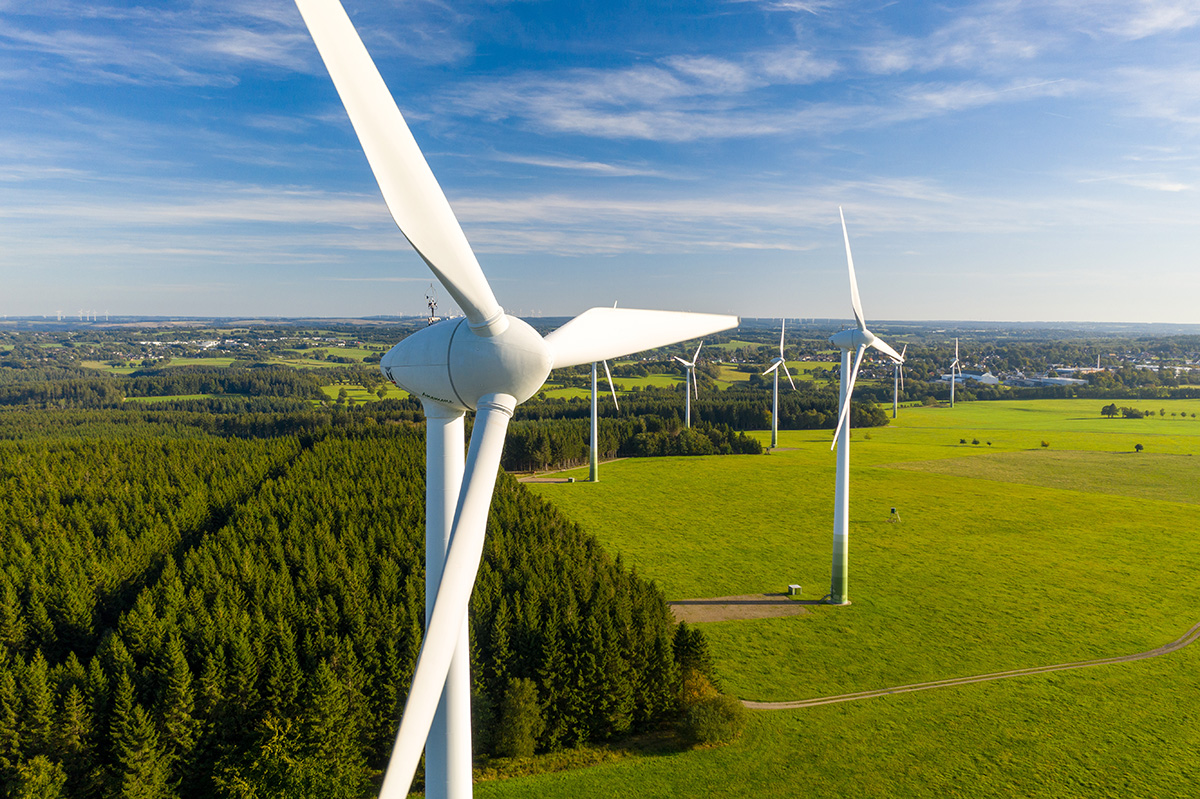
Ganesarajah has tested the concept by using energy from a wind farm in the Orkney Islands off the coast of Scotland to power a range of university projects encompassing fields such as deep learning, visual effects and scientific computing. “We proved this idea that you could use free intermittent power to deliver computing to people who need it,” he says, adding that he has proceeded to develop and commercialise similar solutions all over the world, with projects in North America.
Thanks to Ganesarajah’s long-standing interest and involvement in the energy market, BE has been able to develop partnerships across the supply chain, both with utility companies such as Scottish Power, SSE and RWE, and companies that provide power infrastructure, such as Siemens. BE has built a global pipeline of clean-energy-powered projects spanning hydropower, nuclear, wind, solar and biomass. Currently, BE supports more than 300 major global enterprises, including Microsoft, Dell, Lenovo and IBM. While much of the growth is driven by AI companies in the US, and particularly Silicon Valley, global government-funded AI initiatives are also accelerating demand and therefore creating new opportunities for renewable energy suppliers.
BE’s model is to deliver pre-engineered, factory-built infrastructure that can be deployed in months rather than years. These systems are designed to meet the power and compute requirements of modern AI infrastructure, including data centres, with speed, consistency and long-term efficiency in mind. For projects that are connected to the power grid, BE can provide a “plug and play” solution. “Our model is definitely more niche, but we’re niche in a market that’s exploding in growth, because there’s almost an arms race to build these AI capabilities,” says Ganesarajah.
With a lean structure and more than 30 employees, BE sees itself as a startup operation that can react to changes in the market more nimbly than a large business. “Change is actually what we thrive on,” he says. “We can change things really fast, and that’s the typical superpower of the startup.”
With computing infrastructure evolving so quickly, an agile approach offers significant advantages. Servers built today are considerably more power-hungry than those produced just two years ago. By being able to adapt and respond rapidly, BE can deliver solutions to meet such dynamic needs.
BE stands apart by recognising that the challenges of compute and energy cannot be solved separately, they must be designed as a single, integrated system. While the industry often describes energy as a constraint on AI, the reality is that compute and power must be designed together from the outset. There is an argument that these data centres are using up all the available power. To solve this dilemma, BE focuses on what Ganesarajah calls “power-first infrastructure” – that is, building infrastructure for computing in a way that is sustainable and positive for the energy sector, without creating further problems for regulators or policymakers.
BE has plans to expand into new markets and technologies in the years ahead. In addition to meeting the needs of the US market, which is acting as the driving force for the next industrial revolution, the company is looking to add to its portfolio of facilities in the UK, where the demand for cheap energy is particularly acute because of the country’s relatively high energy costs. Elsewhere, it is building on its commercialisation projects in Canada, and it has carried out early development work in Africa and Asia.
“That’s the starting position,” says Ganesarajah. “We want to deliver our solutions all over the world –and, ultimately, we also want to be part of the story where it becomes top of a government’s agenda in energy resources.”
Visit Site